

If you have ever watched a wooden door frame swell during monsoon season, crack in dry heat, or crumble under termites, you already understand why HDPE door frames are gaining attention. These frames are made from high-density polyethylene, a plastic used in pipes, containers and playground equipment. They are built to ignore the problems that destroy traditional frames.
This guide explains what HDPE door frames are, how they compare with wood, steel and UPVC, where they work best, what to check before buying, and how to install and maintain them. It also covers their limitations, because no material is perfect.
What Are HDPE Door Frames?
HDPE door frames are door-surround components (the vertical jambs and the horizontal head) made from high-density polyethylene, a thermoplastic polymer. According to the HDPE overview on Wikipedia, the material is known for its strength-to-density ratio and is widely used in products such as piping, bottles and containers.
Unlike timber, high-density polyethylene is not organic. It does not absorb water the way wood does, and it gives termites and fungi nothing to feed on. That is why HDPE is often described as a rot-resistant, maintenance-free material for doors and frames. These frames are often grouped under the broader category of plastic door frames, though they differ from PVC and UPVC in chemistry and flexibility.
Is HDPE the Same as PVC or UPVC?
No. HDPE is polyethylene, while PVC and UPVC are polyvinyl chloride. HDPE is generally more flexible and impact-tolerant, while UPVC is typically stiffer. When comparing HDPE door frames with UPVC door frames, check each product’s actual specification sheet rather than relying on the material name alone.
Are HDPE Door Frames the Same as WPC Door Frames?
Not exactly. WPC (wood-plastic composite) frames blend wood fibre or powder with a plastic base. Some WPC products use polyethylene or PVC as the binder. Pure HDPE door frames contain no wood fibre, so they behave differently under moisture. Always ask the manufacturer what a product contains.
How HDPE Door Frames Are Made
Manufacturers typically produce HDPE door frames by melting HDPE resin and shaping it through extrusion or moulding into profiles. Some designs are hollow or multi-chambered to save weight. Others include internal reinforcement. Colour pigments and UV stabilisers are usually added during production.
Because processes and formulations vary between brands, the density, wall thickness, load rating and finish of two HDPE door frames can differ considerably. Ask any supplier for written specifications before you buy.
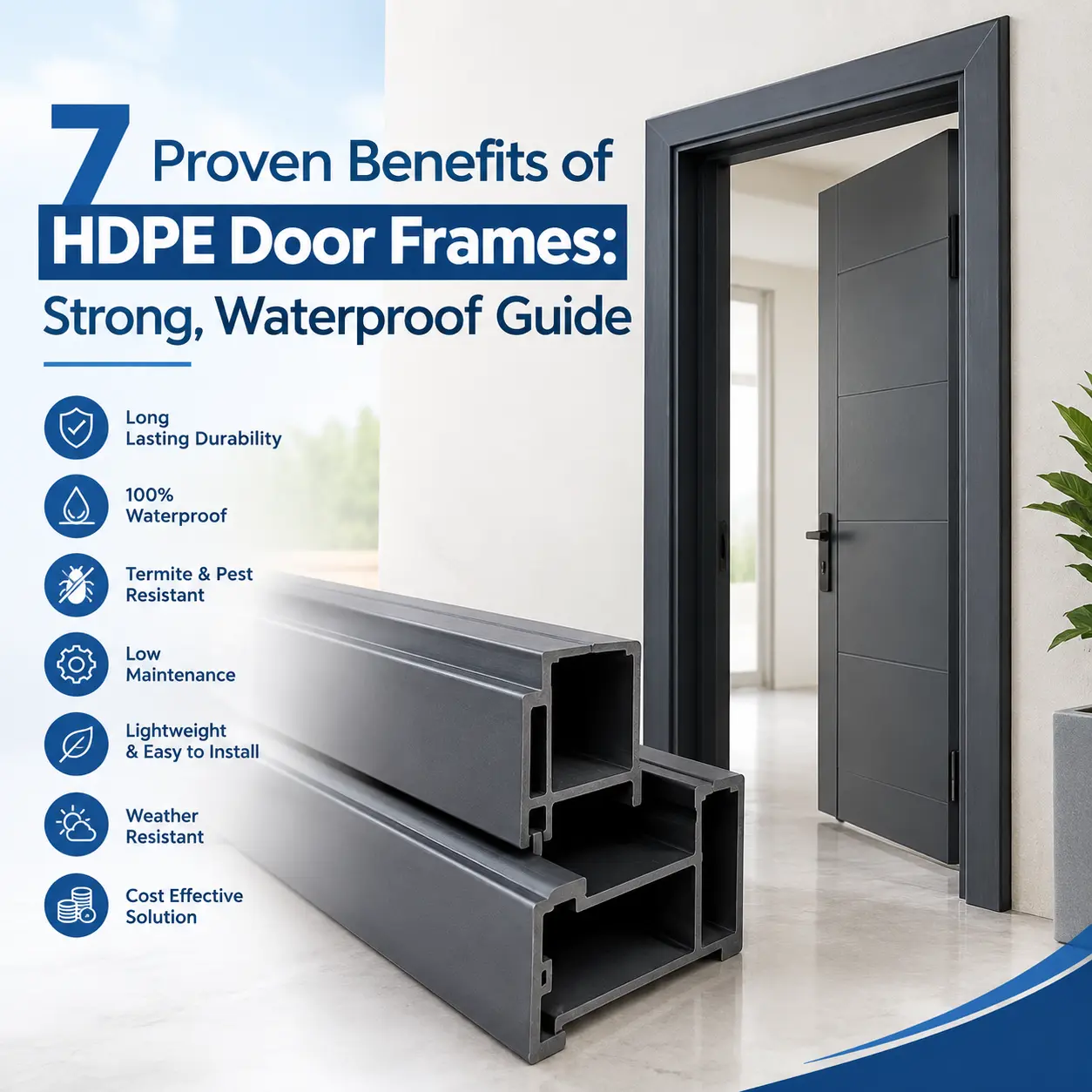
7 Proven Benefits of HDPE Door Frames
1. Excellent Moisture Resistance in HDPE Door Frames
Water is the leading cause of frame failure. Wood absorbs moisture, swells, warps and eventually rots. HDPE has very low water absorption, so HDPE door frames are a sensible choice for bathrooms, kitchens, laundry rooms and homes in humid regions. This also makes them a natural fit as waterproof door frames for wet areas.
2. Termite-Proof and Pest-Resistant Design
Termites feed on cellulose, which HDPE does not contain. This makes HDPE door frames a good option as termite-proof door frames in places where infestations are common. One caution: termites can still travel through gaps, mortar cracks, or adjacent wooden structures, so proper site treatment still matters.
3. Rot and Fungus Resistance
Because the material is non-porous, mould and fungus have little to grip. That is why these are marketed as rot-resistant door frames. You still need to clean surface dirt, since grime can hold moisture, but the material itself will not decay.
4. Low Maintenance Over the Years
Wood frames need periodic sanding, sealing and repainting. Steel frames need rust protection. By contrast, HDPE door frames usually need only an occasional wipe with mild soap and water. For homeowners, landlords and builders, that means fewer repair cycles and lower long-term upkeep.
5. Lightweight and Easier to Handle
HDPE is lighter than solid hardwood and steel in most comparable profiles. Lighter HDPE door frames are easier to carry, position and fix on site, which can reduce labour effort. Actual weight depends on the profile design.
6. Recyclability and Sustainability Potential
HDPE carries resin identification code 2 and is one of the more commonly recycled plastics. Some manufacturers also use recycled content, and since it replaces timber, choosing HDPE door frames can reduce demand for hardwood. Recyclability depends on local collection facilities and on whether the frame has mixed materials, so ask the supplier about recycled content and end-of-life options.
7. Consistent Dimensions and Clean Finish
Extruded or moulded frames can hold consistent dimensions, so doors tend to hang squarely with fewer gaps. Many HDPE door frames come in wood-grain textures or solid colours, which gives a finished look without painting.
Are HDPE Door Frames Better Than Wooden Frames?
It depends on your priorities. Wood offers a classic look and high stiffness, but it needs protection against moisture and pests. HDPE door frames trade some traditional appeal for durability and low upkeep. In humid or termite-prone locations, HDPE often makes more practical sense. For a heritage home, wood may still be preferred.
HDPE Door Frames vs Steel Frames
Steel is stronger and non-combustible, which matters in fire-rated or high-security settings. But steel can corrode in damp or coastal environments if coatings fail. For ordinary residential use, especially in wet areas, HDPE door frames can be a more corrosion-free option.
Best Places to Use HDPE Door Frames
Bathroom and Toilet Entrances
Constant steam and splashing make bathrooms the classic use case. HDPE bathroom door frames avoid the swelling and decay common with wood, so many builders choose them for these locations first.
Kitchens, Laundry Rooms, and Utility Areas
These areas see humidity, spills and temperature swings. HDPE door frames handle moisture well, which keeps doors aligned.
Homes in Humid or High-Rainfall Regions
In places with long monsoon seasons or coastal humidity, timber frames can fail early. Water-tolerant HDPE door frames offer a durable alternative. If you live in South Asia, Southeast Asia or another humid zone, this is one of the strongest arguments for switching.
Rental Properties and Budget Housing Projects
Landlords and developers value low maintenance, so HDPE door frames can reduce repair callouts over time.
Schools, Hostels and Public Buildings
Frames in these buildings take daily knocks and frequent cleaning. HDPE’s impact tolerance and easy-clean surface suit them, though fire-safety rules for the specific building type must be checked first.
Limitations of HDPE Door Frames You Should Know
A trustworthy buying guide mentions the downsides. Consider these before choosing HDPE door frames:
- Fire behaviour: HDPE is combustible. Do not use standard HDPE door frames where fire-rated doors are required, and confirm local building codes.
- Lower stiffness than steel or hardwood: Some designs rely on internal reinforcement. Ask whether a given frame has it and what load the door can safely carry.
- Thermal expansion: Plastics expand and contract with temperature. Good installation leaves proper allowance.
- UV exposure: Without UV stabilisers, plastics can fade or become brittle outdoors. For exposed locations, confirm the product is UV-stabilised.
- Aesthetic preference: Some buyers prefer natural timber’s look and feel.
- Quality variation: Cheap, thin-walled products can disappoint. This is a manufacturing issue, not a flaw of HDPE itself.
How to Choose the Right HDPE Door Frames
Use this checklist before ordering.
Check Material and Product Specifications
Ask for a data sheet. It should state the material grade, wall thickness, weight, and whether reinforcement or recycled content is used. Be wary of any supplier that cannot provide this.
Match the Frame to the Door Weight
A light hollow door and a heavy solid door place different loads on the frame. Confirm the maximum door weight the frame is designed to carry.
Confirm UV Stabilisation and Colour Stability
If the frame will face sun or rain, ask about UV protection and whether the colour runs through the profile or is surface-applied.
Verify Sizing and Wall Fit
Measure the wall thickness and opening before ordering. Make sure the HDPE door frames you choose fit your wall depth, or can be customised.
Ask About Warranty and After-Sales Support
Warranty terms differ by brand. Read the terms in writing, including what is excluded.
Compare Price Against Lifetime Cost
HDPE door frames may cost more or less than timber depending on your market and wood type. Compare repair, repainting and replacement costs over the years rather than just the purchase price.
HDPE Door Frames Installation Guide
Always follow the manufacturer’s instructions first. The general process below applies to most door frame installation work.
Step 1: Prepare the Opening
Check that the opening is clean, plumb and square. Fix any uneven masonry before fitting.
Step 2: Position and Level the Frame
Set the HDPE door frame in the opening and use wedges or spacers to level it. A plumb frame prevents door sagging later.
Step 3: Fix Securely
Use appropriate fasteners, such as anchor screws or fixing bolts, at the spacing the manufacturer recommends. Pre-drilling is often advised to prevent cracking.
Step 4: Leave Expansion Allowance
Because plastic moves with temperature, avoid over-tightening or locking the frame rigidly with no tolerance.
Step 5: Seal and Finish
Use a suitable sealant or filler around the edges to block water and drafts. Then hang the door and test its swing.
If you are unsure, hire an installer experienced with plastic or composite frames.
Maintenance Tips for HDPE Door Frames
- Wipe with a soft cloth, mild soap and water.
- Avoid harsh solvents, abrasive pads and strong chemicals unless the manufacturer approves them.
- Inspect fixings and seals once or twice a year.
- Clear drainage gaps and keep the bottom of the frame free of standing water.
- Touch up sealant if it cracks or peels.
This minimal routine is why many people call these maintenance-free door frames, though “low maintenance” is the more accurate phrase.
HDPE Door Frames and the Environment
HDPE is widely recycled in many countries, and replacing hardwood with plastic frames can reduce pressure on forests. Still, plastics have an environmental footprint: they come from fossil-fuel feedstocks, and recycling access varies by location. The greener choice is a frame with verified recycled content and a long service life. Ask suppliers for environmental documentation instead of accepting general “eco-friendly” claims.
Why Consider SK Frames for HDPE Door Frames
When you shop for HDPE door frames, work with a supplier that is open about specifications, sizes and support. SK Frames offers frame solutions you can explore at skframers.com. Before you buy, visit the website or contact the SK Frames team to confirm current product ranges, available sizes, finishes, warranty terms and delivery options. Product details change over time, so verifying them directly is the safest approach.
When speaking with SK Frames or any other supplier, ask:
- What material grade is used in the frames?
- Is there internal reinforcement, and what door weight is supported?
- Are the frames UV-stabilised?
- What warranty applies, and what does it cover?
- Can sizes be customised for your project?
FAQS About HDPE Door Frames
What are HDPE door frames made of?
They are made from high-density polyethylene, a durable thermoplastic. Some designs include additives such as UV stabilisers and pigments, and some use reinforcement.
Are HDPE door frames waterproof?
HDPE has very low water absorption, so these frames resist swelling and rot. For best results, seal the joints and gaps during installation.
Are HDPE door frames termite-proof?
The material is not a food source for termites, so the frame itself is not eaten. Pests can still enter through other routes, so treat the surrounding structure too.
Can HDPE door frames be used outdoors?
Yes, if the product is UV-stabilised and designed for exterior use. Confirm this with the manufacturer.
Are HDPE door frames strong enough for heavy doors?
Strength varies by design. Check the manufacturer’s stated load rating and ask whether reinforcement is included.
Are HDPE door frames fireproof?
No. HDPE is combustible. For fire-rated openings, use products certified for that purpose and follow local codes.
How long do HDPE door frames last?
Lifespan depends on product quality, climate and installation. Ask for the manufacturer’s warranty rather than relying on general estimates.
Do HDPE door frames need painting?
Usually not, since colour is often built into the material. If you want to paint, confirm with the supplier which paints adhere properly.
Are HDPE door frames cheaper than wooden frames?
Prices vary by region, timber type and brand. Compare the total cost over time, including maintenance and replacement.
Conclusion
HDPE door frames solve real problems: moisture damage, termite attacks, rot and constant upkeep. They are especially useful in bathrooms, kitchens and humid climates. They are not ideal where fire-rated performance or maximum stiffness is required, so choose based on location, load and local building rules.
Before you commit, compare specifications, ask for written warranty terms, and install carefully. To explore options, visit SK Frames and confirm current details directly.