

When designing or renovating a residential or commercial building, every detail matters—and structural entryways dictate both the safety and aesthetic integrity of the space. For decades, builders relied entirely on traditional timber chaukhats, despite their well-documented vulnerabilities to humidity, warping, and wood-boring insects.
Today, the construction industry is undergoing a massive shift toward sustainable, low-maintenance materials. Among these innovations, HDPE door frames have emerged as the definitive gold standard for longevity, structural stability, and absolute resistance to environmental degradation. Whether you are balancing a rustic wooden door design or seeking a sleek, minimalist door design, switching to high-density polyethylene profiles guarantees an installation that stands the test of time.
What Are HDPE Door Frames? The Engineering Breakthrough
High-Density Polyethylene (HDPE) is a thermoplastic polymer renowned for its incredible strength-to-density ratio. When engineered into structural door frames, this material eliminates the traditional flaws associated with organic building products.
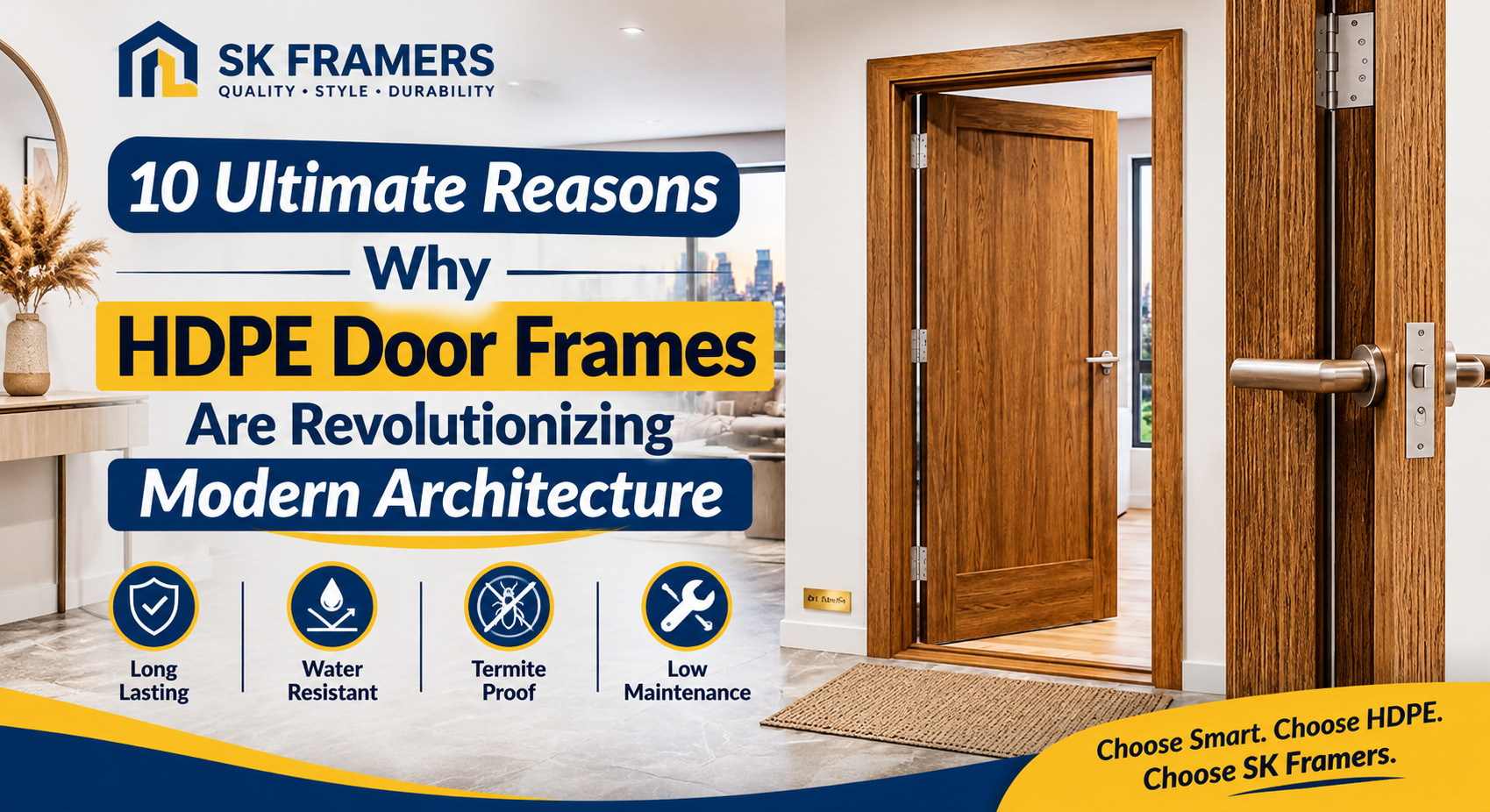
Unlike organic timber, HDPE contains zero cellulose—the core organic material that termites feed on. This fundamental chemical distinction means that HDPE door frames are completely immune to termite infestations, dry rot, and fungal decay without requiring toxic chemical treatments. Furthermore, because HDPE is non-porous at the molecular level, moisture cannot penetrate the material, preventing the seasonal swelling and door-jamming common in humid climates.
Comparing Entryway Materials: HDPE vs. Wooden Door, PVC Door, and Fiber Door
Selecting the right frame and leaf combination requires understanding how alternative materials stack up against modern polymer solutions.
1. Traditional Wooden Doors and Frames
A classic wooden door offers timeless warmth and visual elegance. However, traditional timber requires continuous maintenance, including sanding, polishing, and repainting cycles. In wet zones like bathrooms or kitchens, wood inevitably absorbs moisture, leading to warping, rotting, and costly replacements.
2. PVC Doors and Frames
Polyvinyl Chloride (PVC) is frequently used as an affordable alternative for wet areas. While PVC resists moisture effectively, standard rigid PVC lacks the high impact resistance and structural load-bearing capacity required for heavy main entrances or high-traffic commercial corridors. Over time, UV exposure can also cause standard PVC to yellow or become brittle.
3. Fiber Doors and Frames
Fiberglass or Fiber-reinforced polymer options offer good strength and moisture resistance. However, they can be brittle under high-impact forces, and custom sizing them on-site during installation often proves labor-intensive and messy.
In contrast, HDPE door frames combine the structural toughness required for heavy operational use with absolute chemical inertness, outperforming traditional options across residential, commercial, and industrial applications.
Aesthetic Harmony: Matching HDPE Frames with Modern Door Design and Wooden Door Design Trends
One of the common misconceptions about synthetic building materials is that they lack aesthetic versatility. Modern manufacturing processes have completely dismantled this myth.
-
Seamless Texturing: Premium manufacturers provide HDPE door frames with advanced wood-grain surface finishes that closely mimic the rich textures of natural oak, walnut, or mahogany.
-
Complementing Wooden Door Designs: If your interior concept revolves around a grand wooden door design, an HDPE frame can be finished in matching wood tones, ensuring zero visual compromise while securing unmatched structural durability.
-
Contemporary Door Designs: For ultra-modern architectural themes featuring minimalist lines and monochromatic palettes, matte or gloss-finished polymer frames integrate flawlessly into clean drywall or masonry openings
Key Benefits of Choosing SK Frames for Long-Lasting Durability
When sourcing high-performance polymer entryways, partnering with industry leaders ensures uncompromised quality. SK Frames has established itself as a premier manufacturer of advanced HDPE door frames, delivering engineered solutions tailored to modern construction demands.
Why Builders and Homeowners Trust SK Frames:
-
Zero Maintenance Costs: Factory-finished surfaces mean you will never need to worry about repainting, repolishing, or treating for pests.
-
Absolute Moisture Resistance: Ideal for bathrooms, kitchens, and ground-floor entryways exposed to rising dampness.
-
Precision Customization: Frames are engineered to exact measurements, ensuring leaves hang straight and locking mechanisms engage smoothly from day one.
-
Eco-Friendly Manufacturing: Built with sustainable polymer technologies that reduce deforestation pressures while delivering a lifetime of dependable performance.
Comprehensive Material Comparison Table
To help you evaluate your options for your next construction or remodeling project, review the technical comparison table below:
| Material Property | Solid Wood | PVC Door Frames | Fiber Door Frames | HDPE Door Frames (SK Frames) |
| Moisture Resistance | Poor (swells and rots) | Good | Good | Excellent (Impervious) |
| Termite Susceptibility | High (contains cellulose) | None | None | None (Zero cellulose) |
| Maintenance Required | High (Regular polish/paint) | Low | Low | None (Factory finished) |
| Structural Longevity | 5 to 15 years (climate dependent) | 10 to 15 years | 15 to 20 years | Lifetime Performance |
| Best Application | Dry interior rooms | Budget wet areas | Exterior/Interior | All rooms, especially wet & high-traffic zones |
Step-by-Step Installation Guide for Optimal Performance
Proper installation ensures that your entryways remain square, secure, and fully functional. Follow these professional steps when installing your new frame system:
-
Opening Preparation: Clear the rough masonry opening of debris, old anchor bolts, and dust. Ensure the wall levels are checked using a spirit level.
-
Dry Fit Assessment: Position the pre-cut frame sections into the opening to verify vertical and horizontal alignments.
-
Anchoring and Leveling: Secure the frame using heavy-duty masonry anchors or fasteners at designated load points. Keep adjustments balanced to prevent distortion.
-
Grouting and Sealing: Fill structural gaps with high-grade polyurethane foam or mortar grout depending on structural requirements, ensuring a rigid bond with the wall.
-
Hanging the Leaf: Mount the door leaf onto the pre-fitted hinges, testing the latch alignment to guarantee smooth opening and closing cycles.
Frequently Asked Questions
1. Are HDPE door frames suitable for heavy main entrance doors?
Yes. Because high-density polyethylene possesses high structural density and impact resistance, these frames easily support heavy solid-core doors and security leaves when anchored correctly.
2. Do HDPE frames require painting or polishing?
No. They arrive with durable factory finishes designed to resist fading and wear, eliminating ongoing maintenance cycles.
3. Can I use an HDPE frame with a traditional wooden door design?
Absolutely. Manufacturers offer diverse color palettes and wood-grain textures that match classic or contemporary wooden door designs seamlessly.
4. Why are HDPE frames superior to wood in humid environments?
Wood contains cellulose and absorbs moisture from the atmosphere, causing it to swell and rot. HDPE is non-porous and contains zero cellulose, making it completely waterproof.
Conclusion
Investing in high-performance structural components safeguards your property against costly repairs and recurring maintenance headaches. By transitioning to advanced HDPE door frames from trusted providers like SK Frames, you secure lifetime durability, pristine aesthetics, and complete peace of mind